
I-10 at FM 563, Chambers County, Texas - between Houston and the Beaumont-Port Arthur refinery corridor. See the location and full data screen in iVerify Report 69. Current stage: market validation and site investigation; site control has not yet been obtained.
In brief
Winnie 563 is a phased truck-stop and freight-service concept on I-10 at FM 563 in Chambers County, Texas - wholesale-priced cardlock fuel, secure parking with an HOS reset, and fenced IOS / yard space, on a corridor carrying 70,000+ vehicles a day between Houston and the Beaumont-Port Arthur refinery and LNG build-out. iVerify screened the node (Report 69). The calculator below lets you test the economics yourself. This is a conceptual thesis, not a site plan - market validation is underway and site control has not yet been obtained.
Want the underlying report and data? See the full iVerify screen for this node →
Interactive · adjust the assumptions yourself
Fuel & entrance-fee cash flow calculator
The same yard, priced as a fuel and access operation rather than a monthly parking lease: every truck pays a flat entrance fee, most of them also fuel at a discount to street price. Move any of the three inputs below and the three-year cash flow table recalculates live - this is the underwriting engine itself, not a canned example.
Defaults to a conservative base case: 60 trucks/day, a nickel-a-gallon fuel margin, 100-gallon average fill. Drag any slider up toward the corridor's real traffic (484 carriers within 30 mi, ~70,002 vehicles/day on I-10 mainline) to see the upside; nothing above this base case is underwritten yet. Held fixed regardless of the sliders: $14 entrance fee (every truck, park or not), 85% of trucks also fuel, 25% operating expense ratio (card fees, shrinkage, insurance, compliance, light attendant/security - not yet itemized), 3-year hold, 3%/yr NOI growth. The $2,473,000 physical build and land (the 15-acre position, not just the 10-acre operating footprint) and its $1,608,000 loan (65% LTC, 7.0%, 25-yr amortization) don’t change with these sliders - only the revenue assumptions do. See the assumptions appendix for where each fixed number comes from.
| Year 1 | Year 2 | Year 3 | |
|---|---|---|---|
| Entrance fees | |||
| Fuel margin | |||
| Gross revenue | |||
| Less: operating expense (25%) | |||
| Net Operating Income |
| Year 1 | Year 2 | Year 3 | |
|---|---|---|---|
| Interest | |||
| Principal | |||
| Total debt service | |||
| Net cash flow |
Basis: $2,473,000 total development cost (the full 15-acre position: 10ac/150-stall yard + twin-tank cardlock fuel system, plus ~5ac of out parcels at $30,000/ac - the out parcels generate no revenue here but are a real acquisition cost). Debt $1,608,000 at 65% loan-to-cost, 7.0%, 25-year amortization - fixed, does not resize with the revenue sliders. Operating expense ratio (25%) is a planning assumption, not yet itemized by category or confirmed against a real quote. No exit/sale value is computed on this page; the three-year cash flow is the output. Source: idevelop.nsgia.com scenario 49, this calculator's formulas mirror the proforma exactly (annual_cash_flow_service.py, 2026-07-28).
Interactive · set your margin, see your price
Pricing & margin - what you'd charge
Wholesale spot price is not what either side pays at the pump. Diesel is taxed when it leaves the terminal, before any markup from us or anyone else. That tax is fixed; the only number you control is the margin stacked on top of it.
| Gulf Coast ULSD spot (7/20/2026) | $4.039 |
| + Texas diesel tax | $0.200 |
| + Federal diesel tax | $0.244 |
| = Landed cost (before margin) | $4.483 |
| + Your margin | $0.050 |
| = Your price at the pump | $4.533 |
| Compared to | Their price | Your discount |
|---|---|---|
| Love's Beaumont #696 | $5.449 | |
| Petro Beaumont #0304 | $5.359 | |
| Pilot, Orange TX | $4.899 | |
| 610 Hwy 124, Winnie (independent) | $4.599 | |
| JP Truck Stop, Winnie (independent) | $4.550 |
Spot price and taxes move independently of this margin slider - they are the same fixed inputs the cash flow calculator above uses. Competitor prices are official posted prices at the chains, third-party snippets at the two Winnie independents (directional, not audited) - see the full sourcing in Diesel supply options, PDF. The independents already pull volume off the interstate at roughly an 80-90¢/gal discount to the two chain travel centers - that is the gap this market has already proven works, not a theoretical threshold.
A place to fuel and park between Houston and the refineries
The problem on this stretch of I-10
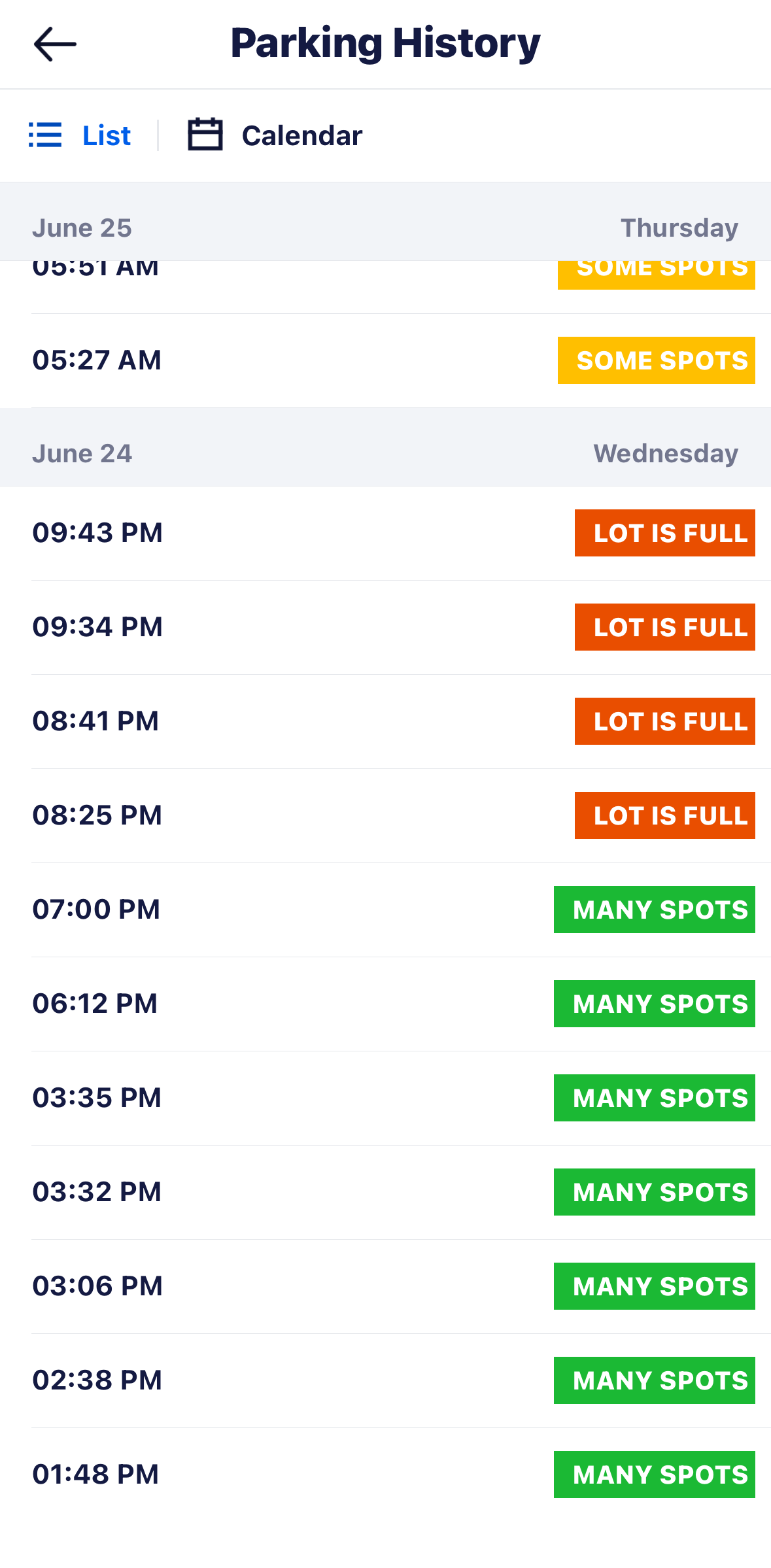
Between Houston and the Beaumont-Port Arthur refinery and LNG corridor, drivers run out of good options. The big stops down toward Beaumont fill up. Love's on the Beaumont side and the Petro in Beaumont both frequently report full or near-full conditions, especially evenings and overnight - a driver checking in at 9 PM is circling, not parking. Public truck parking on this whole stretch is thin: on the order of eighty spaces serve a district that needs thousands - TxDOT’s 2024 Southeast Texas Truck Parking Action Plan counts ~80 public spaces out of roughly 7,200 regional truck spaces in this district.
That leaves a driver two bad choices heading east: push on into a corridor where the lots are already full, or stop early at whatever's open, full or not. Neither is a plan. Both cost time, and time on this run is money.
The site, and why it works
The site sits on I-10 in Chambers County, between Houston to the west and the Beaumont-Port Arthur industrial corridor to the east: a place to fuel, park overnight behind a fence, and get back on the road in either direction, no swap, no exchange, no second driver required. The interchange carries real volume - the FM 563 junction alone reads 70,002 AADT on the I-10 mainline, 76,533 combined junction flow - and the routing favors it: Houston and Beaumont traffic stays on I-10 and passes straight through.
To the east, the Beaumont-Port Arthur corridor is running two LNG builds at once (Port Arthur LNG and Golden Pass LNG) on top of the existing refineries, pulling thousands of contractor trucks through the corridor into 2030 and beyond. To the west, Houston's industrial base is the largest freight market on the Gulf Coast. A stop here serves both directions on the same lane: fuel at a fair price, secured overnight parking, and room to legally sit out an hours-of-service reset, without the twenty-mile gamble on whether the next stop has room - and zero existing truck stops sit within 7.7 miles of this interchange.

North Star Group
Why North Star
Forty years of site-driven commercial development - the method here is the same one used on completed big-box, retail, and redevelopment projects.
Proprietary corridor screening - iVerify (patent pending) ranked this interchange out of a national screen before any capital was spent on it.
Developer-led validation - market first, then control, then construction; each phase gated on the one before it.
Winnie 563 is one project in a continuing pipeline, not an isolated idea. North Star identifies logistics sites nationally, screens and validates the strongest candidates, and carries them toward site control and financing; the same screening that surfaced this interchange keeps producing the next candidate, so each project stands on its own while the pipeline continues.
This page is the method's worked example: a national screen identified the Beaumont-Port Arthur freight basin, corridor analysis isolated this node, parcel review produced the candidate land position above, and demand validation and underwriting now determine whether the project advances or stops.
The Method
How Winnie 563 advances
The same four phases carry every North Star project from a national screen to a realized outcome; this is where Winnie 563 stands in them.
| Phase | At Winnie 563 |
|---|---|
| Find | Done. iVerify's national screen surfaced the Beaumont-Port Arthur basin, corridor analysis isolated the I-10 and FM 563 interchange, and parcel review produced the candidate 15-acre position in the six-parcel assembly. |
| Validate | Current. Confirm access and truck routing, utilities, drainage and soils, land pricing, fuel supply, carrier demand, and willingness to pay - the validation items listed under Deal Economics. |
| Underwrite | Next. Replace planning assumptions with quotes and market evidence; retest cost, debt service, truck capture, fuel margin, operating expense, and the return threshold. The project advances if it clears, and stops if it does not. |
| Monetize | Later. Operate, lease, refinance, sell, recapitalize, retain, or joint venture - chosen after validation, not before (see Exits below). |
Deal economics
How this pays
North Star is evaluating a 15-acre position at the FM 563 interchange: a 10-acre secured yard, built with a twin-tank cardlock fuel system, plus ~5 acres of adjoining out parcels held unimproved. Site control is not yet in place - this is the candidate position the deal is screened against, not a parcel under contract or option. The exact pricing structure is not decided: it could be a flat entrance fee on every truck, discounted fuel as the draw with a separate charge only for those who stay overnight, or some other mix. The calculator above models one candidate structure, entrance fee plus fuel margin, to test whether the economics work at all; it's a way to check the math, not a locked decision.
This node is one screen out of a national program: iVerify ranks every U.S. market and candidate site (national screen), and this interchange was screened in iVerify Report 69 with the parcel-level view in the Broker Tools PDF. The program's investor materials are at iplan.nsgia.com.
| Land position | Figure |
|---|---|
| Operating yard (revenue-generating, in the build cost below) | 10 ac, $300,000 ($30,000/ac asking) |
| Out parcels (unimproved, no revenue modeled, also in the build cost below) | ~5 ac, ~$150,000 ($30,000/ac asking) |
| Total position | ~15 ac, $450,000 |
The out parcels generate no revenue in this model but their cost is in the $2,473,000 build cost below; they run as informal trailer/IOS parking while they wait on a use.
Build cost, full 15-acre position
| Cost line | Figure |
|---|---|
| Land (15 ac, operating yard + out parcels) | $450,000 |
| Yard construction + cardlock fuel system | ~$1,633,000 |
| Soft costs (engineering, legal, permits, financing, developer fee, contingency) | $270,000 |
| Utility installation | $120,000 |
| Total development cost | $2,473,000 |
Debt: $1,608,000 at 65% loan-to-cost, 7.0%, 25-year amortization. Land covers the full 15-acre position, not just the 10-acre operating footprint; all costs from idevelop scenario 49.

Proforma case, at the calculator's 60 trucks/day base case
The interactive calculator above lets you flex the volume, fuel margin, and fill size; the table below is that same math at the calculator's default settings, the conservative floor this deal is underwritten to. Higher volumes are upside to validate, not the base case.
| Net Operating Income | Debt Service | Cash Flow | |
|---|---|---|---|
| Year 1 | $299,756 | ($136,380) | $163,376 |
| Year 2 | $308,749 | ($136,380) | $172,369 |
| Year 3 | $318,011 | ($136,380) | $181,631 |
Year 1 yield on cost: 12.1% (Net Operating Income ÷ $2,473,000 total development cost).
Lender metrics, same base case
| Metric | Figure |
|---|---|
| Debt-service coverage, Year 1 | 2.20x ($299,756 NOI / $136,380 debt service) |
| Break-even volume, all revenue | ~28 trucks/day covers debt service (vs. 60/day underwritten) |
| Break-even volume, entrance fees alone | ~36 trucks/day covers debt service with zero fuel margin |
| Fuel sold at the base case | ~5,100 gallons/day (51 fueling trucks x 100 gal) |
At the 60 trucks/day base case, entrance fees alone cover debt service 1.69x; the fuel margin is cushion, not a requirement. Break-evens computed from the calculator's fixed assumptions above; move the sliders and they move too.
Illustrative planning figures from the validation model, not a projection of return. Source: idevelop.nsgia.com scenario 49, pulled 2026-07-28.
Exits
| Exit | What you sell | Why it works |
|---|---|---|
| 1. Sell the operating business | The stabilized fee-and-fuel operation as a going concern | Valued as an operating business (an EBITDA-style multiple), not a real-estate cap rate; methodology to be selected |
| 2. Sell the out parcels | The ~5 acres of unimproved out parcels, sold to a retail or service operator once the yard proves the traffic | An operator pays a premium for access to captive, proven truck traffic |
| 3. Develop and sell the best use (conditional) | A parcel at this node that clears the development screen (~25 acres), developed by North Star as a build-to-suit, service building, or travel-center format, leased to a creditworthy tenant on a triple-net basis, and sold as a stabilized asset | A credit net lease sells at a lower cap rate than an operating business trades, so the value is higher; the spread sits outside the cash flow figures above, as upside, not a claim this page makes |
Exit 1 has no dollar figure attached because the valuation method is not chosen yet - an operating fee/fuel business is valued on its earnings, not a real-estate cap rate. Open item, disclosed as such.
Depending on what validation proves, the outcome can be any of: operate, lease to an operator, refinance after stabilization, sell, recapitalize, retain for operating income, or joint venture. The likely acquirers or long-term counterparties are travel-center and fuel operators, fleet and 3PL users, and the institutional buyers now active in industrial outdoor storage and truck parking - which of them fits depends on whether the validated project behaves as an operating business, a leased asset, or both.
The base case is the secured parking, staging, and cardlock-fuel operation priced above. The larger six-parcel assembly also permits later testing of related logistics uses - IOS and contractor laydown, fleet and 3PL facilities, cross-dock, travel services, or petrochemical-support formats - none of which is included in the base-case economics.
Order of work
Known validation items

| Item | Why it matters |
|---|---|
| Truck volume (trucks/day) | The highest-leverage item and the load-bearing assumption behind every figure above; the calculator flags when the implied return is outside a plausible range for the build cost |
| Access / driveway approval | Yard viability depends on a permitted, safe ingress/egress; TxDOT may deny a curb cut near the interchange |
| Soils / surface section | Wet, shrink-swell clay drives detention, a heavier pavement section, and foundation work |
| Fuel supply + margin | Landed cost and achievable margin, scoped separately - see Diesel supply options in Backup Documents |
| Parcel control & basis | The floor back-solves the most you can pay for land; the deal turns on acquiring at or below it |
| Zoning / permitted use | Yard, IOS, fuel, and repair uses can be treated differently; no zoning at the example parcel is a starting point, not a clearance |
| Exit-1 valuation methodology | Not yet set - an operating-business valuation, not a cap rate, needs to be chosen before a sale-price figure is attached to Exit 1 |
Order of work
Market first, then control
The screen comes first, before any spend on site control, diligence, or construction. Does the FM 563 interchange and the six-parcel assembly support a secured yard, IOS, contractor staging, fleet terminal, or larger logistics use at the required basis, and does a parcel here have a safe, permitted truck route in and out? If it holds, the next step is choosing the parcel and ownership path, then sizing a control-and-diligence budget to it. The worked example is one illustration; the broader parcel screen gives assembly paths behind it. Control is funded once the node, the parcel, and the terms line up.
North Star Group / iVerify
Developer-led method
North Star Group is a developer-led systems and real estate platform focused on practical site origination, development strategy, infrastructure, and applied AI tools. iVerify is North Star’s corridor-screening and parcel-origination system for freight, IOS, truck-service, and logistics-land opportunities.
Michael Hoffman is the principal of North Star Group, Inc. His background includes real estate development, systems integration, and invention work, with issued patents and pending housing / site-screening concepts. The Winnie 563 package reflects a developer-led method: screen the corridor, isolate candidate parcels, identify the demand signal, prepare a validation budget, and advance only if the economics survive real-world checks.
Contact
Michael Hoffman
North Star Group, Inc.
Fairhope, Alabama
701-770-9118
michaelh@nsgia.com
www.nsgia.com
This is a pre-validation screening package.